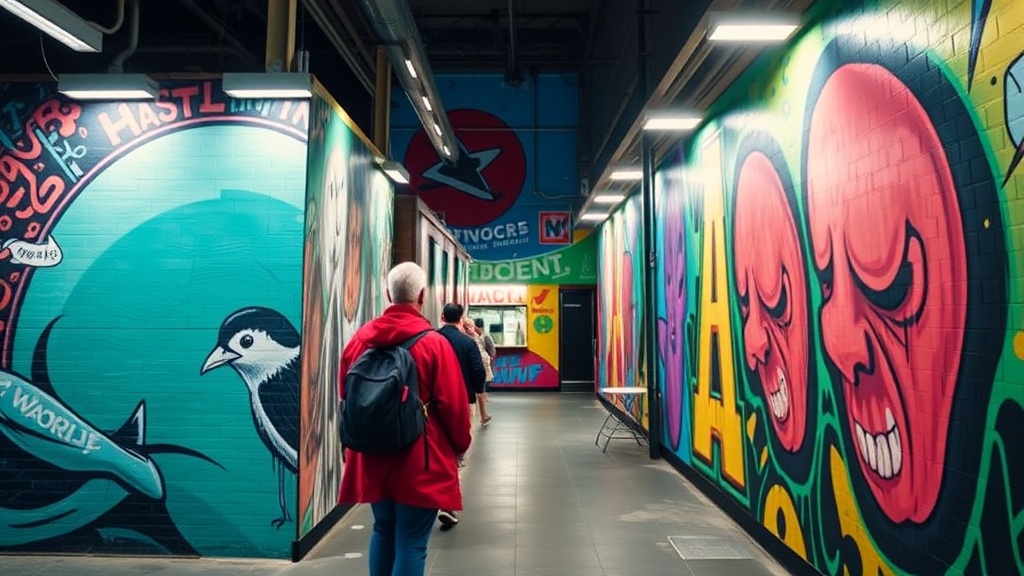
Spotted in the Stalls: A Guide to the Market's Best Street Art and Murals

You’re walking past a brick wall on Augusta Avenue when a massive, colorful portrait of a local figure catches your eye, only to realize the mural has changed since your last visit. This is the reality of Kensington Market. The street art here isn't static; it's a living, breathing part of the neighborhood's identity that shifts with the seasons and the artists who pass through. This guide tracks the most iconic murals and street art pieces currently defining the market's visual identity, helping you spot the heavy hitters and the hidden gems tucked away in the alleys.
Kensington isn't a museum. It's a working neighborhood where graffiti and high-end street art coexist. You'll see a stencil of a cartoon character on a dumpster right next to a commissioned three-story mural. It's part of the charm—and the grit—that makes this corner of Toronto so distinct.
Where is the best street art in Kensington Market?
The best street art in Kensington Market is concentrated along the major arteries like Augusta Avenue, Baldwin Street, and Kensington Avenue, with the most impressive large-scale murals found on the side walls of older brick buildings.
If you want the "greatest hits," start your walk near the intersection of Baldwin and Augusta. Many of the most recognizable pieces are located on the sides of the local restaurants and shops. For example, the colorful, stylized faces often found on the brickwork near the coffee shops provide a perfect backdrop for photos. If you're a fan of large-scale, professional work, look up. The scale of these pieces is often much larger than what you'd find in a standard gallery setting.
The art here serves several purposes. It marks territory, it celebrates local culture, and sometimes, it's just pure, unadulterated expression. You might find a piece that celebrates the immigrant history of the area or something much more abstract. It's worth noting that because this is a living environment, some pieces are temporary. A piece you saw six months ago might be gone today, replaced by something new.
To get the most out of your walk, I suggest grabbing a coffee first. If you want to fuel your art tour, check out my coffee crawl through the market's best hidden cafes to find a spot to sit and sketch or just people-watch.
Types of Art You'll Encounter
It's not just about the big murals. The diversity of the medium is what keeps the visual experience interesting. You'll see a variety of styles throughout your walk:
- Wheatpastes: These are paper-based posters that are "glued" to the walls, often featuring political messages or graphic illustrations.
- Stencils: Quick, sharp, and often satirical, these are a staple of the Kensington alleys.
- Large-Scale Murals: Commissioned works that often take up entire building facades.
- Graffiti Tags: The raw, authentic layer of the city that provides texture to the backstreets.
How do I find the hidden murals in the alleys?
To find the hidden murals, you have to move away from the main sidewalks and step into the narrow pedestrian walkways and alleyways that run between the shops.
The "real" art often lives in the gaps. While the big murals on Augusta are easy to find, the most interesting, intimate pieces are tucked away in the side streets. If you see a narrow gap between two buildings, take a look. Often, these small spaces are filled with layers of street art that tell a more localized story. It's a bit like an outdoor gallery that doesn't require a ticket.
The City of Toronto actually has programs that support public art, which is why you see a mix of sanctioned, high-quality murals and the more spontaneous, unauthorized pieces. This tension between the "official" and the "underground" is what gives the market its edge.
If you're looking for something specific, like a particular artist's work, you might have to dig a little deeper. Most of the art here isn't labeled with a plaque. You have to use your eyes and your intuition. It's a way of engaging with the city that feels much more personal than visiting a traditional museum.
| Art Style | Location Type | Vibe |
|---|---|---|
| Large Murals | Main Streets (Augusta/Baldwin) | Iconic, Bold, Public |
| Wheatpastes | Back Alleys/Side Walls | Gritty, Political, Rapidly Changing |
| Stencils | Street Furniture/Small Walls | Witty, Sharp, Small-scale |
| Graffiti Tags | Unsanctioned Spaces/Backs of Buildings | Raw, Authentic, Constant |
Is there a specific art walk route?
While there isn't one single "official" route, a loop starting from the north end of Kensington Market near College Street and moving south toward Dundas Street West is the most effective way to see the highest density of visual art.
The goal shouldn't be to rush through. If you try to see everything in an hour, you'll miss the details. Instead, treat it like a slow stroll. The art is meant to be absorbed. One minute you're looking at a massive, colorful face on a brick wall, and the next, you're spotting a tiny, clever stencil near a trash bin. It's those small moments that make the walk worthwhile.
The route usually looks something like this:
- Start at the north end near the intersection of College and Kensington.
- Walk down Augusta Avenue, looking up at the building facades.
- Turn into the side alleys to find the smaller-scale wheatpastes and stencils.
- Finish your loop by exploring the streets near Baldwin, where the art often feels a bit more curated.
If you're planning to spend a few hours doing this, you might want to combine it with a shopping trip. I've written about where to find vintage treasures and rare vinyl in Kensington, which can be a great way to spend the afternoon after you've finished your art walk.
Don't be afraid to wander. The best things in Kensington are often found when you aren't looking for them. A random turn down a side street might lead you to a wall covered in incredible, colorful layers of paint that you never would have seen from the main road. This is the essence of the neighborhood—it rewards the curious.
One thing to keep in mind: be respectful of the shop owners. While the art is public, some of it is on private property. It's perfectly fine to take photos (most of the time, the locals are happy to have the exposure), but try not to block the entrance to businesses or disrupt the flow of the market. The community here is tight-knit, and the art is part of their shared identity.
As you walk, notice the textures. The way the light hits the spray paint, the way the paper of a wheatpaste might be peeling at the edges, the way the colors interact with the weathered brick. It's a sensory experience that goes beyond just "looking at pictures." It's a piece of the city's soul, captured in paint and ink.
Whether you're a professional photographer looking for the perfect shot or just a local resident who wants to see what's new, the walls of Kensington Market always have something to tell you. Just keep looking up and looking around. The stories are everywhere.